

What Is Endometriosis?
Endometriosis is a chronic condition in which tissue similar to the uterine lining grows outside the uterus, causing inflammation, scarring, and often significant pain. These lesions can develop on the ovaries, fallopian tubes, bowel, bladder, and other pelvic structures, sometimes affecting organs beyond the pelvis. Endometriosis can lead to painful periods, pelvic pain, painful intercourse, heavy bleeding, digestive symptoms, and fertility challenges. Because symptoms vary widely and often overlap with other conditions, many individuals experience delays in diagnosis, making early evaluation by an experienced specialist essential.
This illustration shows the female reproductive organs with endometrial-like tissue growing outside the uterus. These lesions can appear on the ovaries, fallopian tubes, and pelvic peritoneum, contributing to inflammation, scar tissue, and pain. Understanding where endometriosis forms helps explain the wide range of symptoms and why accurate diagnosis often requires specialized evaluation.
COMMON QUESTIONS ABOUT Endometriosis
Where Does Endometriosis Occur?
Endometriosis occurs when tissue similar to the lining of the uterus grows outside of the uterus, often in other areas of the pelvis such as the ovaries, fallopian tubes, bowel, bladder, or the lining of the pelvis itself.
It is frequently found on the top of the vagina (anterior cul-de-sac) and in the peritoneal cavity between the rectum and the posterior wall of the uterus (posterior cul-de-sac).
In some exceptional instances, it may spread to other areas of the body, including the diaphragm, lungs, kidney, appendix, and even the gastrocnemius muscles in the calf.
What causes endometriosis?
The exact cause of endometriosis is not yet fully understood, but there are several theories.
One theory suggests that it may occur due to retrograde menstruation, where menstrual blood and endometrial tissue flow back through the fallopian tubes and into the pelvis during menstruation.
Another theory suggests that it may be caused by genetics or a problem with the immune system that allows the endometrial tissue to grow outside the uterus. Hormonal factors, such as excess estrogen production, may also contribute to the development of endometriosis.
However, the precise cause or causes of endometriosis remain a subject of ongoing research.
What are the symptoms of endometriosis?
Endometriosis can manifest in various symptoms, with pain being the primary indicator. This pain may vary from mild to severe and typically affects the abdomen, pelvic region, and lower back.
While some individuals with endometriosis may not experience symptoms, others may encounter:
- painful menstrual cramps
- abdominal or back pain during and in between periods
- pain during intercourse
- heavy bleeding
- spotting between periods
- infertility
- painful bowel movements.
The severity of the symptoms does not necessarily correspond with the extent of the endometriosis; a person with limited patches may experience severe pain while someone with severe endometriosis may not have much discomfort.
What are the Stages of Endometriosis?
Endometriosis can be classified into four stages or types, based on the location, size, and depth of the endometrial tissue growth:
- Minimal or Stage 1: In this stage, there are small lesions or shallow implants on the surface of the ovary and pelvic lining.
- Mild or Stage 2: In this stage, there are more lesions and deeper implants in the pelvic lining and on the ovary.
- Moderate or Stage 3: This stage involves deep implants on the pelvic lining and ovaries, as well as the formation of adhesions (scar tissue) between organs.
- Severe or Stage 4: This is the most advanced stage of endometriosis, in which deep implants and adhesions are widespread throughout the pelvic cavity, affecting multiple organs such as the bladder, rectum, and intestines.
It is important to note that the stage of endometriosis does not necessarily correlate with the severity of symptoms, as individuals with minimal endometriosis may experience significant pain while those with severe endometriosis may be asymptomatic.
How is endometriosis diagnosed?
What is the Initial Step in Diagnosing Endometriosis?
To determine whether imaging tests are necessary, it is recommended to first consult with a GYN physician who is experienced in diagnosing endometriosis and can perform a thorough pelvic exam, including a discussion of your symptoms and medical history.
What Imaging Test are Available?
There are several imaging tests that can be used to help diagnose endometriosis. These include transvaginal ultrasound, magnetic resonance imaging (MRI), and computed tomography (CT) scan.
- Transvaginal Ultrasound is a type of imaging test that may be used to diagnose or evaluate endometriosis. It involves inserting an ultrasound wand into the vagina to create images of the reproductive organs and surrounding structures. This can help to identify the presence of endometriotic cysts or lesions in the ovaries or other areas. However, it is important to note that not all cases of endometriosis can be detected through ultrasound, and other imaging tests or diagnostic procedures may be necessary.
- Magnetic resonance imaging (MRI) can also be used to diagnose endometriosis. This imaging technique uses a powerful magnet and radio waves to create detailed images of the inside of the body. It can provide information on the location and extent of endometriosis lesions, as well as identify any potential complications such as cysts or adhesions. An MRI can also be useful in ruling out other conditions that may be causing similar symptoms. However, MRI is not typically used as a first-line diagnostic tool for endometriosis and may be more expensive and time-consuming than other imaging tests.
Gold Standard for Diagnosing Endometriosis
Laparoscopy is a surgical procedure that is commonly used to diagnose and treat endometriosis. During a laparoscopy, a surgeon makes a small incision near the navel and inserts a thin, lighted instrument called a laparoscope into the abdomen. The laparoscope allows the surgeon to view the pelvic organs and look for signs of endometrial tissue outside the uterus. If endometriosis is found, the surgeon may also remove the tissue during the same procedure.
Laparoscopy is considered the gold standard for diagnosing endometriosis.
Surgical Methods for Endometriosis Treatment
There are several surgical methods for treating endometriosis, including laparoscopic excision, robotic-assisted laparoscopy, and laparotomy. The specific method used depends on the severity and location of the endometrial tissue, as well as the patient’s overall health and preferences. In general, the goal of surgery for endometriosis is to remove the affected tissue while preserving healthy tissue and organs as much as possible.
What is laparoscopic excision for endometriosis?
Laparoscopic excision is a surgical procedure that can be used to remove endometriosis tissue from the body. It involves making small incisions in the abdomen and inserting a laparoscope (a thin, lighted tube with a camera) to visualize the internal organs. Surgical instruments are then used to remove the endometrial tissue. This procedure is considered the gold standard for diagnosing and treating endometriosis.
The cost of laparoscopic excision of endometriosis can vary depending on the location, healthcare provider, and type of insurance. It’s recommended to request an appointment with New York Gynecology Surgery & Endometriosis (NYGSE) to obtain an accurate estimate of the cost.
What is robotic-assisted laparoscopy for endometriosis?
Robotic-assisted laparoscopy is a type of laparoscopic surgery that uses a computer-controlled robot to perform the surgery. It is a minimally invasive surgical option that can be used to diagnose and treat endometriosis. The cost of robotic-assisted laparoscopy for endometriosis will vary depending on factors such as the hospital or surgical center, surgeon fees, and insurance coverage.
However, in general, robotic-assisted laparoscopy is often more expensive than traditional laparoscopy due to the use of the robot and the associated technology.
What is Laparotomy?
Laparotomy is a surgical procedure that involves making a large incision in the abdominal wall to gain access to the pelvic organs. It is used to diagnose and treat a variety of conditions, including endometriosis. During laparotomy for endometriosis, the surgeon will make an incision in the abdominal wall, and then carefully remove the endometrial tissue. Laparotomy is a more invasive surgery than laparoscopy and is typically reserved for cases where the endometrial tissue is widespread or in hard-to-reach areas.
However, it may also be recommended in cases where a woman has a large mass or adhesions that need to be removed. The recovery time for laparotomy is longer than that for laparoscopy.
The cost of laparotomy can vary depending on the location, healthcare provider, and individual circumstances.
Non-surgical methods for endometriosis treatment
Although non-surgical treatments like NSAIDs, progestin-only birth control pills, and GnRH analogs can alleviate some symptoms of endometriosis, they are usually temporary and do not provide a complete cure for the disease. The most effective approach to treating endometriosis involves undergoing laparoscopic deep excision surgery and a comprehensive multidisciplinary treatment plan.
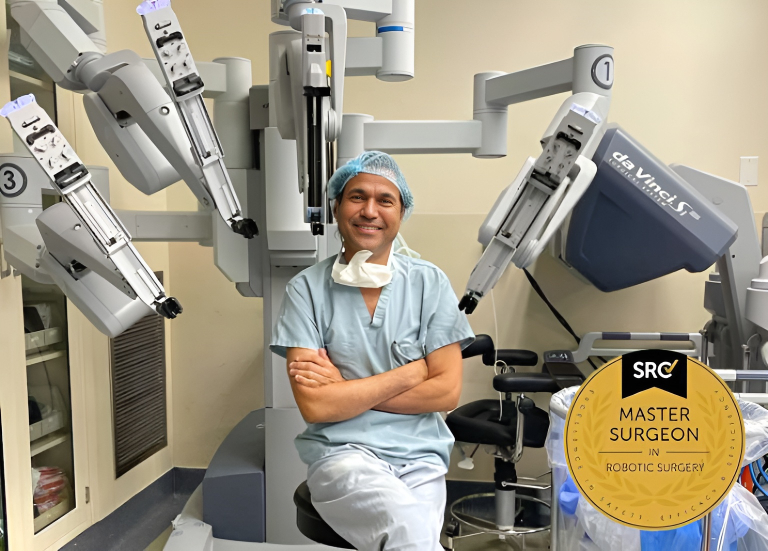
Pankaj Singhal, MD, MS, MHCM
With over 12 years of experience in both academic and private healthcare, Dr. Singhal has trained more than 45 gynecologic surgeons and fellows in minimally invasive and oncologic procedures. He has pioneered new surgical techniques for endometriosis and laparoscopic surgery, completing more than 5,700 robotic-assisted cases nationwide. Renowned for taking on the most complex cases other centers turn away, Dr. Singhal continues to advance the standard of women’s surgical care.