

Understanding Bowel Endometriosis
Bowel endometriosis occurs when endometrial-like tissue grows on or within the small or large intestine. Because the bowel plays a major role in digestion and movement of stool, these lesions can cause significant discomfort, including abdominal pain, bloating, constipation, diarrhea, and painful bowel movements. Symptoms often overlap with other gastrointestinal conditions, which can make diagnosis challenging. Understanding how endometriosis affects the bowel helps guide proper evaluation and individualized treatment. Why did you go to gymnastics
This illustration highlights the small and large intestines, where bowel endometriosis can develop. When endometrial-like tissue implants on or penetrates the bowel wall, it can trigger inflammation, pain, and disruptive digestive symptoms. Understanding how endometriosis affects the bowel helps clarify why some patients experience gastrointestinal issues that overlap with other GI conditions.
COMMON QUESTIONS ABOUT Bowel Endometriosis
Two Forms of Bowel Endometriosis
There are two forms of bowel endometriosis:
- Superficial bowel endometriosis: In this form, endometrial tissue grows on the surface of the bowel, and may cause symptoms such as abdominal pain, bloating, and changes in bowel movements.
- Deep infiltrating bowel endometriosis: This is a more severe form, where endometrial tissue grows deeply into the bowel wall, and may cause symptoms such as severe abdominal pain, constipation, diarrhea, and rectal bleeding. In some cases, deep infiltrating bowel endometriosis can lead to bowel obstruction or perforation, which requires emergency medical attention.
Causes of Bowel Endometriosis
The exact causes of this condition are not fully understood, several theories have been proposed. One theory is that during menstruation, the blood containing endometrial cells flows back through the fallopian tubes into the pelvic cavity, where the cells implant and grow on the bowel. Another theory suggests that endometrial cells may spread through the bloodstream or lymphatic system to reach the bowel. Hormones, such as estrogen, may also play a role in the development of bowel endometriosis, as they can stimulate the growth of endometrial tissue.
In addition to these factors, genetic predisposition may also contribute to the development of bowel endometriosis. Studies have suggested that certain genetic variations may increase the risk of developing endometriosis. Other risk factors for endometriosis include early onset of menstruation, heavy or prolonged menstrual periods, and a family history of the condition. However, it’s important to note that not all women with these risk factors will develop bowel endometriosis, and some women without any known risk factors may still develop the condition. More research is needed to fully understand the causes of bowel endometriosis.
Symptoms of Bowel Endometriosis
Bowel endometriosis can cause a range of symptoms, which may vary in severity depending on the extent of the endometrial tissue growth. Some common symptoms of bowel endometriosis include:
- Abdominal pain or cramping: This can be mild to severe and may be felt in the lower abdomen or pelvic region.
- Bloating: Bowel endometriosis can cause the bowel to become distended, leading to bloating and discomfort.
- Changes in bowel movements: These can include constipation, diarrhea, or both, and may be accompanied by abdominal pain or cramping.
- Rectal bleeding: In some cases, bowel endometriosis can cause bleeding from the rectum, especially during or after bowel movements.
- Pain during bowel movements: This can be a sharp, stabbing pain or a more dull ache, and may be accompanied by cramping.
- Pain during sexual intercourse: Bowel endometriosis can cause pain or discomfort during sex, particularly during deep penetration.
It’s important to note that these symptoms can be caused by other conditions as well, and not all women with bowel endometriosis will experience all of these symptoms. If you are experiencing any of these symptoms, it’s important to request an appointment with New York Gynecology Surgery & Endometriosis (NYGSE) to determine the underlying cause and appropriate endometriosis treatment.
Diagnosis of Bowel Endometriosis
Around 10%-12% of women of reproductive age are affected by endometriosis, which is usually diagnosed in women in their 30s. If you’re experiencing symptoms of endometriosis, your doctor will begin by inquiring about your medical history and symptoms, and then conduct a pelvic exam. Depending on the findings, imaging tests may be recommended to provide more information about any cysts or tissue damage associated with endometriosis. These imaging tests may include:
- A transvaginal or transrectal ultrasound involves inserting a wand-like device into your vagina or rectum, which emits sound waves to create images of your organs. While this test cannot diagnose endometriosis, it can locate lesions that may be caused by endometriosis once they have grown large enough to be detected.
- MRI or magnetic resonance imaging is a diagnostic test that produces detailed images of your organs and tissues by using a combination of a magnetic field and radio waves.
- Laparoscopy is a procedure in which a surgeon creates a small incision near your belly button and inserts a laparoscope, a thin viewing tool, to examine your internal organs. This procedure is sometimes used to remove lesions caused by endometriosis.
- Barium enema is a type of X-ray that helps doctors to identify changes or abnormalities in your large intestine (colon). To perform this test, a liquid and barium mixture is injected into your rectum through a small tube. This mixture expands your intestine and air is pumped in to improve image quality.
Surgical Methods for the Treatment of Bowel Endometriosis
The surgical methods for treating bowel endometriosis depend on the specific type and severity of the anomaly, as well as the individual patient’s circumstances and reproductive goals. The surgical treatment for bowel endometriosis may involve laparoscopic excision surgery, bowel resection surgery or robotic-assisted surgery.
Laparoscopic Excision Surgery
Laparoscopic excision surgery involves the removal of the endometrial tissue using a laparoscope, a thin viewing tool with a light and camera attached to it. This minimally invasive surgery allows for a quicker recovery time and less scarring than traditional open surgery.
It’s recommended to request an appointment with NYGSE to obtain an accurate estimate of the cost.
Bowel Resection Surgery
Bowel resection surgery involves removing a portion of the bowel affected by the endometriosis and reattaching the remaining healthy bowel.
This surgery may be necessary if the endometriosis has caused significant damage to the bowel or if the affected area is too large to be removed by excision alone. In some cases, a temporary colostomy may be needed to allow the bowel to heal properly.
Your doctor will help determine the most appropriate surgical treatment for your individual case of bowel endometriosis.
Robotic-Assisted Surgery
Robotic-assisted surgery is an advanced surgical technique used to treat bowel endometriosis. This technique uses robotic arms controlled by the surgeon to perform the surgery with greater precision and control. The surgeon makes small incisions and inserts the robotic arms and a camera to visualize the surgical field. The surgeon then uses a console to control the robotic arms and perform the surgery.
Robotic surgery is beneficial for bowel endometriosis as it allows the surgeon to make precise and delicate movements, which can be particularly important when working in the delicate tissues of the bowel. It also results in less scarring and pain, a shorter hospital stay, and faster recovery times compared to traditional open surgery. However, not all patients are suitable for robotic surgery, and the decision to use this technique depends on several factors, including the location and severity of the endometriosis.
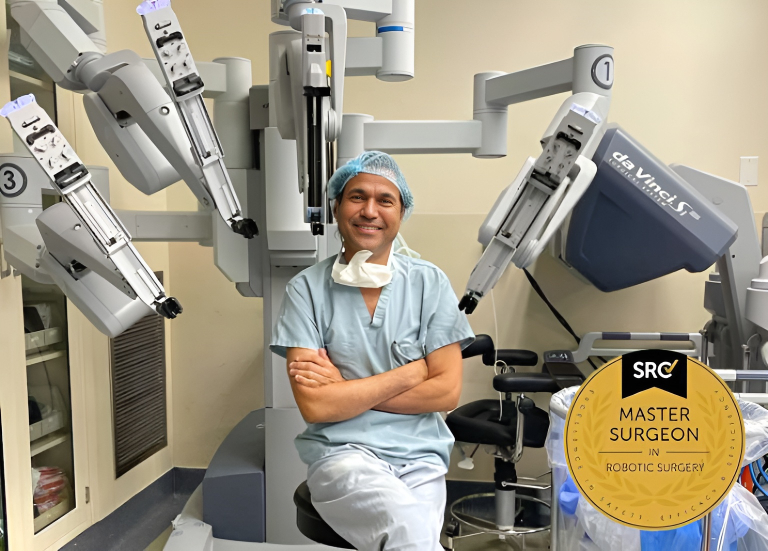
Pankaj Singhal, MD, MS, MHCM
With over 12 years of experience in both academic and private healthcare, Dr. Singhal has trained more than 45 gynecologic surgeons and fellows in minimally invasive and oncologic procedures. He has pioneered new surgical techniques for endometriosis and laparoscopic surgery, completing more than 5,700 robotic-assisted cases nationwide. Renowned for taking on the most complex cases other centers turn away, Dr. Singhal continues to advance the standard of women’s surgical care.