

What Is Levator Ani Syndrome?
Levator Ani Syndrome is a chronic pelvic floor disorder in which the levator ani muscles—responsible for supporting the bladder, uterus, and rectum—become overly tense, irritated, or spasmed. This can produce persistent pressure, burning, or deep aching in the pelvis, rectum, or lower abdomen. Symptoms often worsen with prolonged sitting, bowel movements, or sexual activity. While the exact cause varies, factors such as muscle tension, nerve irritation, prior pelvic surgery, trauma, and endometriosis are all known to contribute.
Medical illustration showing the levator ani muscles within the pelvic floor, highlighting key components—including the pubococcygeus, iliococcygeus, and puborectalis—that support the pelvic organs. Used to demonstrate how muscle tension or irritation in this area can lead to chronic pelvic pain.
COMMON QUESTIONS ABOUT Levator Ani Syndrome
Causes of Sciatic Endometriosis
The exact cause of sciatic endometriosis is not yet fully understood, but it is believed to occur when endometrial tissue grows outside the uterus and attaches to or infiltrates the sciatic nerve.
Endometrial tissue can grow in different areas of the body due to a process called retrograde menstruation. During menstruation, some endometrial tissue flows backwards through the fallopian tubes and into the pelvic cavity instead of being expelled from the body. This misplaced tissue can then implant and grow on organs and tissues outside of the uterus, including the sciatic nerve.
Other factors that may contribute to the development of sciatic endometriosis include genetics, hormonal imbalances, immune system dysfunction, and environmental toxins.
Risk factors for endometriosis, such as a family history of the condition, early onset of menstrual periods, and prolonged menstrual cycles, may also increase the risk of developing sciatic endometriosis.
If sciatic endometriosis is the underlying cause of the sciatica, leg pain may emerge or worsen just before or during menstrual periods. This is because endometriosis is linked to hormonal changes, and as estrogen and progesterone fluctuate during the menstrual cycle, they can trigger pain in the legs.
Causes of Sciatic Endometriosis
The exact cause of sciatic endometriosis is not yet fully understood, but it is believed to occur when endometrial tissue grows outside the uterus and attaches to or infiltrates the sciatic nerve.
Endometrial tissue can grow in different areas of the body due to a process called retrograde menstruation. During menstruation, some endometrial tissue flows backwards through the fallopian tubes and into the pelvic cavity instead of being expelled from the body. This misplaced tissue can then implant and grow on organs and tissues outside of the uterus, including the sciatic nerve.
Other factors that may contribute to the development of sciatic endometriosis include genetics, hormonal imbalances, immune system dysfunction, and environmental toxins.
Risk factors for endometriosis, such as a family history of the condition, early onset of menstrual periods, and prolonged menstrual cycles, may also increase the risk of developing sciatic endometriosis.
If sciatic endometriosis is the underlying cause of the sciatica, leg pain may emerge or worsen just before or during menstrual periods. This is because endometriosis is linked to hormonal changes, and as estrogen and progesterone fluctuate during the menstrual cycle, they can trigger pain in the legs.
Diagnosis of Sciatic Endometriosis
Sciatic endometriosis can be challenging to diagnose since it typically mimics the symptoms of sciatica. Nonetheless, it usually occurs alongside regular endometriosis. If a woman has already been diagnosed with endometriosis and experiences sciatica symptoms, sciatic endometriosis may be suspected. Imaging techniques such as magnetic electromyography, computed tomography (CT) scan, magnetic resonance imaging (MRI), or surgery may be used to diagnose the condition.
Additionally, a test called Lasègue’s test or straight leg raise test can provide an indication of sciatic endometriosis. During the test, the patient lies on her back, and the doctor raises the patient’s legs with the knees kept straight. If the sciatic nerve is under pressure due to sciatic endometriosis, the patient will experience sciatic pain when the legs reach an angle of 30 to 70 degrees relative to the examination table.
Early diagnosis is crucial since sciatic endometriosis can result in irreversible nerve damage caused by recurrent bleeding and scarring if left untreated.
Treatment for Levator Ani Syndrome
Surgical intervention is generally not considered as a first-line treatment for Levator Ani Syndrome, as it is primarily a functional disorder of the pelvic floor muscles. However, in some cases where conservative treatments have failed to provide relief, or if there are specific underlying anatomical abnormalities that contribute to the condition, surgical methods may be considered as a treatment option.
The surgical treatment options for Levator Ani Syndrome may include:
Trigger Point Injections
Levator Ani Syndrome trigger point injections are a procedure that involves injecting a local anesthetic, such as lidocaine, into the trigger points in the levator ani muscles, which are localized areas of hyper-irritable muscles. The goal of trigger point injections is to provide temporary relief from muscle tension and pain associated with Levator Ani Syndrome.
The trigger point injections are typically performed by a qualified healthcare professional, such as a gynecologist, urologist, or pain management specialist. The procedure is usually done in an outpatient setting, and the patient may be positioned in a specific way, such as in a lithotomy position, which is similar to the position used during a gynecological exam.
During the procedure, the healthcare provider will use a thin needle to inject a small amount of local anesthetic into the trigger points in the levator ani muscles, which are identified based on the patient’s symptoms and physical examination. The local anesthetic helps to numb the trigger points and temporarily relax the muscles, providing relief from pain and muscle tension.
Trigger point injections for Levator Ani Syndrome are typically performed as part of a comprehensive treatment plan that may also include other conservative measures, such as pelvic floor physical therapy, medication, and lifestyle modifications. The effectiveness of trigger point injections can vary among individuals, and the relief may be temporary. Repeat injections may be needed depending on the individual’s response to the treatment. The decision to undergo trigger point injections should be made in consultation with a qualified healthcare professional, taking into account the individual’s specific condition and overall health.
It’s recommended to request an appointment with New York Gynecology Endometriosis (NYGE) to obtain an accurate estimate of the cost.
Muscle Release Surgery
Muscle release surgery may be considered as a treatment option for Levator Ani Syndrome in cases where conservative measures, such as physical therapy, medications, and trigger point injections, have not provided adequate relief.
The goal of muscle release surgery for Levator Ani Syndrome is to release or alleviate the tension, tightness, or contracture in the levator ani muscles, which can be contributing to the pain and discomfort associated with the condition. The surgical procedure typically involves cutting or releasing the affected muscle fibers or fascia to improve muscle function and reduce pain.
The specific approach and technique used in muscle release surgery for Levator Ani Syndrome may vary depending on the severity and location of the condition. This may include techniques such as myotomy, myofascial release, or tenotomy, depending on the specific needs of the individual patient.
It’s important to note that muscle release surgery for Levator Ani Syndrome is typically considered as a last resort when other conservative treatments have not been effective, and the decision to undergo surgery should be made in consultation with a qualified healthcare provider such as New York Gynecology Endometriosis (NYGE).
Biofeedback
Levator ani biofeedback is a therapeutic technique used to treat Levator Ani Syndrome, which is a condition characterized by chronic pelvic pain caused by tension or dysfunction of the levator ani muscles. Biofeedback is a non-invasive treatment approach that aims to help individuals gain conscious control over the levator ani muscles by providing them with real-time feedback on their muscle activity.
During a levator ani biofeedback session, sensors or electrodes are placed on or near the levator ani muscles to measure their activity. The information is then relayed to the individual through visual or auditory feedback, allowing them to see or hear their muscle activity in real-time. The individual can then learn to modulate their muscle activity based on the feedback provided, with the goal of improving muscle coordination, relaxation, and function.
References
Anatomy, abdomen and pelvis: Levator ani muscle. (October 26, 2022). National Library of Medicine – National Center for Biotechnology Information. https://www.ncbi.nlm.nih.gov/books/NBK556078/
Aredo JV, Heyrana KJ, Karp BI, Shah JP, Stratton P. Relating chronic pelvic pain and endometriosis to signs of sensitization and myofascial pain and dysfunction. National Library of Medicine – National Center for Biotechnology Information. doi: 10.1055/s-0036-1597123
Azzam, H., Halim, M., El-Assaly, H. et al. MRI comparative study of levator ani muscle changes in nulliparous and multiparous females. Egypt J Radiol Nucl Med 50, 56 (2019). https://doi.org/10.1186/s43055-019-0065-0
Biofeedback for somatic conditions. (2022). Johns Hopkins Medicine – Johns Hopkins Healthcare. https://hpo.johnshopkins.edu/doc/fetch.cfm/iQbkLDA2
Christopher R. Chapple (2006). Multidisciplinary management of female pelvic floor disorders. Churchill Livingstone. pp. 4–. ISBN 978-0-443-07272-7
The levator ani (pelvic diaphragm). Copyright 2011 by Lawrence Rizzolo and William Stewart, Yale School of Medicine. http://anatomy.medicine.yale.edu/VisibleHumanLessonPlans/LevatorAni.htm
Tomashev, R., Abbas Shobeiri, S. The levator ani muscle repair: a call to action. Tech Coloproctol 25, 897–899 (2021). https://doi.org/10.1007/s10151-021-02480-1
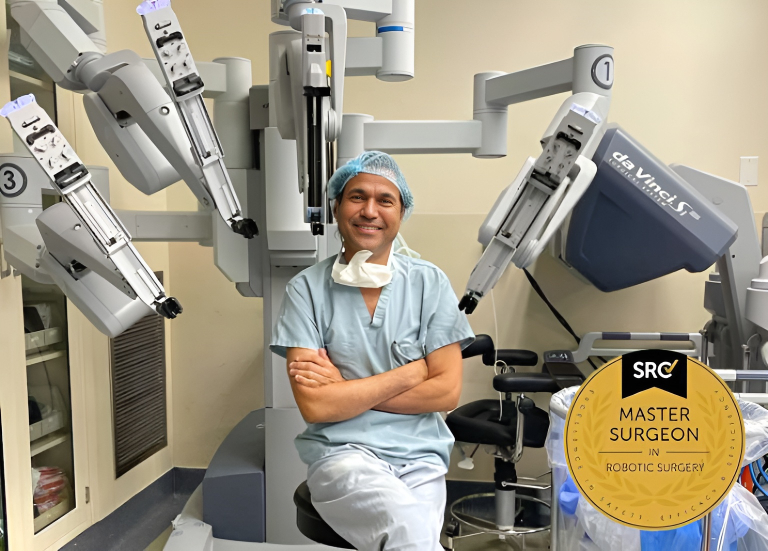
Pankaj Singhal, MD, MS, MHCM
With over 12 years of experience in both academic and private healthcare, Dr. Singhal has trained more than 45 gynecologic surgeons and fellows in minimally invasive and oncologic procedures. He has pioneered new surgical techniques for endometriosis and laparoscopic surgery, completing more than 5,700 robotic-assisted cases nationwide. Renowned for taking on the most complex cases other centers turn away, Dr. Singhal continues to advance the standard of women’s surgical care.