Understanding Ovarian Cancer
Ovarian cancer develops in the tissues of the ovaries, fallopian tubes, or peritoneum—the protective lining of the abdominal cavity. Because it often causes few noticeable symptoms in its early stages, ovarian cancer is sometimes detected only after it has spread, making early awareness and routine gynecologic care especially important. Common warning signs include bloating, abdominal swelling, pelvic pain, and changes in appetite or urinary habits.
At New York Gynecology Surgery & Endometriosis (NYGSE), we specialize in the diagnosis and treatment of ovarian and related gynecologic cancers using advanced surgical and medical techniques. Our team is dedicated to providing expert, compassionate care—helping each patient understand her options and navigate treatment with confidence, clarity, and the highest level of support.
COMMON QUESTIONS ABOUT Ovarian Cancer
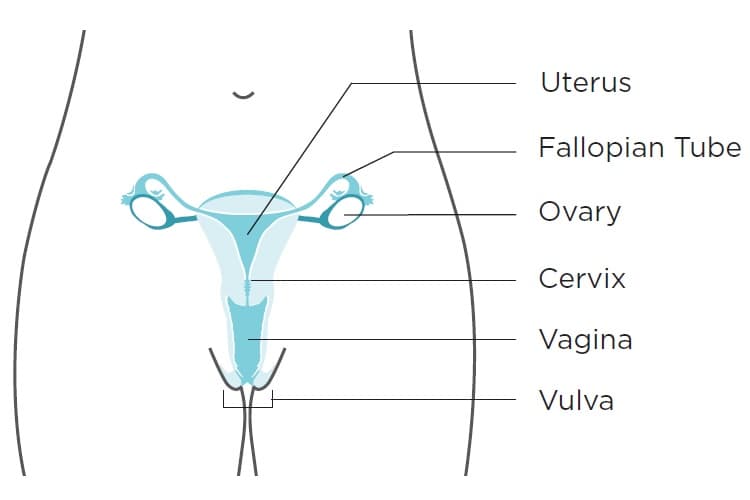
Abnormal cell growth in the body that occurs uncontrollably is referred to as cancer, often named for the area of origin, despite its later spread to other body parts. Ovarian cancer comprises a cluster of diseases that start in the ovaries or the adjacent fallopian tubes and peritoneum. The pelvis houses two ovaries on either side of the uterus, responsible for generating female hormones and eggs. The fallopian tubes, a pair of long, slender tubes alongside the uterus, transport eggs from the ovaries to the uterus. The peritoneum refers to the covering tissue of abdominal organs. 
Early detection is crucial for successful treatment of ovarian cancer. As the disease often presents with signs and symptoms, it is vital to be aware of your body and recognize what is normal for you. While symptoms may not necessarily indicate cancer, it is advisable to consult a healthcare professional to rule out any concerns.
Certain mutations in genes, such as BRCA1 and BRCA2 genes associated with breast cancer susceptibility and Lynch syndrome, can elevate the risk of ovarian cancer.
Ovarian cancer exists in various tumor types and subtypes, with adenocarcinoma being the most common type and serous adenocarcinoma being the most prevalent subtype. Typically, serous adenocarcinomas are high-grade tumors that grow aggressively.
Ovarian cancer affects either one or both ovaries or the adjacent tissue that envelops the abdominal organs.
There are three main types of ovarian cancer, classified based on the cells where the cancer begins. These include:
- Epithelial ovarian cancer: This type of ovarian cancer begins in the cells that cover the surface of the ovary. Epithelial ovarian cancer is the most common type of ovarian cancer and is responsible for around 90% of cases.
- Germ cell tumors: Germ cell tumors develop in the cells that produce eggs in the ovary. This type of ovarian cancer is rare, accounting for about 5% of cases.
- Stromal tumors: Stromal tumors start in the cells that produce hormones in the ovary. These tumors are also rare and account for about 5% of cases.
Each of these types of ovarian cancer can have different subtypes, which may be classified based on factors such as cell structure, genetic mutations, and growth patterns. The subtype of ovarian cancer can affect how it is treated and the prognosis for the patient.
Ovarian cancer can cause a range of symptoms, which may vary depending on the stage and type of cancer. Some of the most common symptoms of ovarian cancer include:
- Bloating or abdominal swelling
- Pelvic pain or pressure
- Difficulty eating or feeling full quickly
- Urinary urgency or frequency
- Back pain
- Fatigue
- Indigestion or heartburn
- Changes in bowel habits, such as constipation or diarrhea
- Menstrual irregularities
- Pain during sexual intercourse
Being attentive to your body and identifying what is usual for you is important. If you experience abnormal vaginal bleeding, it is crucial to seek medical attention immediately. Similarly, if you encounter any of the other symptoms for two weeks or more and they are not typical for you, it is advisable to visit a doctor. Although these symptoms may not necessarily be an indication of cancer, seeking medical attention is the only way to confirm.
The exact cause of ovarian cancer is not yet known, but there are several risk factors that may increase the likelihood of developing the disease. These include:
- Age: The risk of ovarian cancer increases as women get older, with most cases occurring in women over age 50.
- Family history: Women with a family history of ovarian cancer, as well as breast and colorectal cancer, are at higher risk. Inherited mutations in the BRCA1 and BRCA2 genes, as well as Lynch syndrome, are also associated with an increased risk of ovarian cancer.
- Reproductive history: Women who have never been pregnant or who had their first pregnancy at an older age may be at higher risk. Starting menstrual periods at a young age or entering menopause at a later age may also increase the risk.
- Hormone therapy: Long-term use of estrogen hormone therapy without progesterone may increase the risk of ovarian cancer.
- Obesity: Obesity may increase the risk of ovarian cancer, particularly in women who have never used hormone therapy.
- Endometriosis: Women with endometriosis, a condition in which the tissue that lines the uterus grows outside the uterus, may be at higher risk.
It’s important to note that having one or more of these risk factors does not necessarily mean a person will develop ovarian cancer. Many women who develop ovarian cancer have no known risk factors, and not all women with risk factors will develop the disease.
Although there is no definitive way to prevent ovarian cancer, certain factors have been associated with a decreased risk of developing the disease. These include:
- Using birth control pills for five or more years
- Undergoing a tubal ligation, both ovaries removal, or a hysterectomy
- Giving birth
- Breastfeeding for a year or longer
It is important to consult your doctor to discuss methods of reducing your risk. While these methods may help to lower the risk of ovarian cancer, they are not suitable for everyone, and each one has associated risks and benefits. For example, using birth control pills may increase the risk of developing breast cancer. While it may be possible to lower your risk, there is no guarantee that you will not develop cancer.
Screening tests and exams are designed to detect a disease in individuals who are not experiencing any symptoms.
Numerous studies have been conducted to create a screening test for ovarian cancer, but they have not been very successful thus far. The two most commonly used screening tests, in addition to a complete pelvic exam, for ovarian cancer are transvaginal ultrasound (TVUS) and the CA-125 blood test.
- Transvaginal ultrasound (TVUS) is a diagnostic tool that employs sound waves to examine the uterus, fallopian tubes, and ovaries by inserting an ultrasound wand into the vagina. Although it can detect a mass (tumor) in the ovary, it cannot determine whether a mass is benign or cancerous. When used for screening purposes, most of the masses discovered are not cancerous.
- The CA-125 blood test measures the amount of a protein known as CA-125 in the blood. Numerous women with ovarian cancer have elevated levels of CA-125. This test can be helpful as a tumor marker to assist in treatment decisions for women who have been diagnosed with ovarian cancer since elevated levels often decrease if the treatment is effective. However, checking CA-125 levels has not been found to be as effective as a screening test for ovarian cancer. The difficulty in using this test for ovarian cancer screening is that high CA-125 levels are often caused by typical conditions such as endometriosis and pelvic inflammatory disease. Furthermore, not all individuals who have ovarian cancer have a high CA-125 level. When an individual who does not have ovarian cancer has an abnormal CA-125 level, the doctor may repeat the test (to verify the result) and may order a transvaginal ultrasound test.
Ovarian cancer is staged based on the extent of the cancer’s spread within the pelvis and abdomen. The stages of ovarian cancer are:
- Stage I: The cancer is limited to one or both ovaries.
- Stage II: The cancer has spread to other organs within the pelvis, such as the fallopian tubes or uterus.
- Stage III: The cancer has spread beyond the pelvis to the lining of the abdomen and/or nearby lymph nodes.
- Stage IV: The cancer has spread to distant organs, such as the liver or lungs.
Within each stage, there may be further subdivisions based on the extent of the cancer’s spread. The stage of the cancer is an important factor in determining treatment options and prognosis.
The treatment of ovarian cancer depends on several factors, including the stage of the cancer, the type and subtype of ovarian cancer, the woman’s age and overall health, and whether she wants to have children in the future. The main treatments for ovarian cancer include surgery, chemotherapy, and radiation therapy.
- Surgery is often the first treatment for ovarian cancer. The surgeon will remove as much of the cancer as possible, including the ovaries, uterus, fallopian tubes, lymph nodes, and any other tissues that may contain cancer cells. In some cases, the surgeon may recommend a minimally invasive surgery, such as a laparoscopy or a robotic-assisted surgery.
- Chemotherapy is a type of cancer treatment that uses drugs to kill cancer cells. It is usually given after surgery to destroy any remaining cancer cells. Chemotherapy can be given intravenously (through a vein) or directly into the abdomen (intraperitoneal chemotherapy).
- Radiation therapy uses high-energy radiation to kill cancer cells. It is not usually used as the main treatment for ovarian cancer, but it may be used in combination with surgery and chemotherapy in certain cases.
- Targeted therapy is a newer type of cancer treatment that uses drugs to target specific molecules or proteins that are involved in the growth and spread of cancer cells. Targeted therapy is sometimes used in combination with chemotherapy for the treatment of ovarian cancer.
- Immunotherapy is another type of cancer treatment that uses the body’s immune system to fight cancer cells. It is currently being studied for the treatment of ovarian cancer and may be used in the future as a part of a combination therapy.
Overall, the treatment of ovarian cancer is complex and requires a multidisciplinary approach involving a gynecologic oncologist, medical oncologist, radiation oncologist, and other healthcare professionals. The goal of treatment is to cure the cancer or to control its growth and spread, while also preserving the woman’s quality of life.
We understand that an ovarian cancer diagnosis can be overwhelming and scary. Here at NYGSE, we build our teams around you. Our expert oncologists will help guide you through this difficult time, answering any questions you may have along the way. We are here for you and will do everything in our power to meet your specific needs and exceed your expectations.
If you or a loved one is experiencing symptoms that may be related to cancer, please call us as soon as possible.
Types of Gynecologic Cancer
Pankaj Singhal, MD, MS, MHCM
With over 12 years of experience in both academic and private healthcare, Dr. Singhal has trained more than 45 gynecologic surgeons and fellows in minimally invasive and oncologic procedures. He has pioneered new surgical techniques for endometriosis and laparoscopic surgery, completing more than 5,700 robotic-assisted cases nationwide. Renowned for taking on the most complex cases other centers turn away, Dr. Singhal continues to advance the standard of women’s surgical care.