

Understanding Ovarian Endometriomas (Chocolate Cyst)
An ovarian endometrioma—often called a “chocolate cyst”—is a type of ovarian cyst formed when endometrial-like tissue grows inside the ovary and collects old, dark blood. These cysts are strongly associated with endometriosis and can lead to pelvic pain, menstrual irregularities, painful intercourse, bloating, and fertility challenges. While some endometriomas remain small and asymptomatic, others can grow, rupture, or cause significant inflammation. Accurate diagnosis and individualized treatment are important for managing symptoms and protecting ovarian function.
This illustration shows the female reproductive anatomy with an endometrioma forming inside the ovary. Endometrial-like tissue can implant on the ovary and accumulate dark, old blood, creating what is commonly referred to as a “chocolate cyst.” Visualizing where endometriomas develop helps explain symptoms such as pelvic pain, bloating, and infertility, and highlights the connection between ovarian cysts and endometriosis.
COMMON QUESTIONS ABOUT Ovarian Endometrioma
How Do Chocolate Cysts in the Ovaries Form?
Retrograde menstruation is believed to be one of the possible causes of endometriosis, but it is not the only cause. Retrograde menstruation occurs when menstrual blood containing endometrial cells flows back through the fallopian tubes and into the pelvic cavity instead of leaving the body through the vagina. As a result, blood accumulates in the ovaries, leading to the development of an endometrioma (chocolate cysts).
In women with endometriosis, it is thought that these endometrial cells can implant and grow on other organs in the pelvic cavity, leading to the development of endometriosis. However, not all women who experience retrograde menstruation develop endometriosis, and other factors such as hormonal imbalances and immune dysfunction may also play a role.
Other theories for the cause of endometriosis include genetic predisposition, environmental factors, and abnormalities in the development of the reproductive system. The exact cause of endometriosis is still not fully understood and more research is needed to better understand the condition.
Why are Ovarian Endometriomas Called “Chocolate Cysts?
Ovarian endometriomas are referred to as “chocolate cysts” because of the dark, reddish-brown fluid that fills them, resembling chocolate. These cysts have the potential to rupture suddenly, causing their contents to spill and adhere to the abdominal cavity’s nearby organ walls.
Symptoms of Ovarian Endometrioma
The symptoms of ovarian endometrioma or chocolate cysts can vary from person to person. Some common symptoms include:
- Pelvic pain: Dull or sharp pain in the lower abdomen or pelvis that may become more severe during menstruation.
- Menstrual irregularities: Heavy or irregular menstrual bleeding, or spotting between periods.
- Pain during sex: Pain or discomfort during sexual intercourse.
- Infertility: Difficulty getting pregnant or experiencing recurrent miscarriages.
- Digestive symptoms: Bloating, constipation, or diarrhea.
In some cases, ovarian endometriomas may not cause any noticeable symptoms, and they are discovered incidentally during a routine pelvic exam or imaging test. It is important to talk to a doctor if you experience any persistent symptoms or have concerns about your reproductive health.
Diagnosis of Ovarian Endometrioma
The diagnosis of ovarian endometrioma or chocolate cysts typically involves a combination of medical history, physical examination, and imaging tests.
During the physical examination, a doctor may perform a pelvic exam to check for any abnormalities or pain. They may also order imaging tests such as an ultrasound, MRI, or CT scan to confirm the presence of an ovarian cyst and determine its size, shape, and location.
In some cases, a doctor may recommend a laparoscopy, which is a surgical procedure that involves making small incisions in the abdomen to insert a camera and other instruments to visualize and biopsy the cyst.
Additionally, blood tests may be conducted to check for markers of endometriosis or other underlying conditions. A definitive diagnosis of ovarian endometrioma is usually confirmed by microscopic examination of the tissue obtained through biopsy or surgical removal.
Surgical Methods for Ovarian Endometrioma Treatment
There are several surgical methods for treating ovarian endometrioma, including laparoscopic cystectomy, robotic-assisted laparoscopy, and laparotomy. The specific method used depends on the severity and location of the endometrial tissue, as well as the patient’s overall health and preferences. In general, the goal of surgery for ovarian endometrioma is to remove the affected tissue while preserving healthy tissue and organs as much as possible.
Laparoscopic Cystectomy
Laparoscopic cystectomy is a surgical procedure that involves the removal of an ovarian cyst, such as an ovarian endometrioma or chocolate cyst, using minimally invasive techniques.
During the procedure, the surgeon makes small incisions in the abdomen and inserts a laparoscope, which is a thin, lighted tube with a camera attached to it, and other surgical instruments. The camera provides real-time images of the cyst and surrounding tissue, allowing the surgeon to carefully remove the cyst while minimizing damage to healthy tissue.
Laparoscopic cystectomy is generally considered a safe and effective treatment option for ovarian endometriomas, and it has several advantages over traditional open surgery, including smaller incisions, less pain and scarring, and a shorter recovery time. However, as with any surgery, there are some risks and potential complications, including bleeding, infection, damage to surrounding organs, and recurrence of the cyst.
Robotic-Assisted Laparoscopy
Ovarian endometrioma robotic-assisted laparoscopy is a minimally invasive surgical procedure used to remove endometrial tissue that has grown inside the ovary while preserving the ovarian function.
Robotic-assisted laparoscopy is a type of laparoscopic surgery that uses robotic arms to perform the surgery instead of a surgeon’s hands. This technology allows for greater precision and control during the procedure, and can result in less pain, scarring, and a faster recovery time compared to traditional open surgery.
The cost of ovarian endometrioma robotic-assisted laparoscopy can vary depending on several factors, including your location, the complexity of the surgery, and your insurance coverage.
Ovarian Endometrioma Laparotomy
Ovarian endometrioma laparotomy is a surgical procedure used to remove endometrial tissue that has grown inside the ovary. Laparotomy is an open surgery that involves making a larger incision in the abdomen to access the affected ovary.
The cost of ovarian endometrioma laparotomy can vary depending on several factors, including your location, the complexity of the surgery, and your insurance coverage.
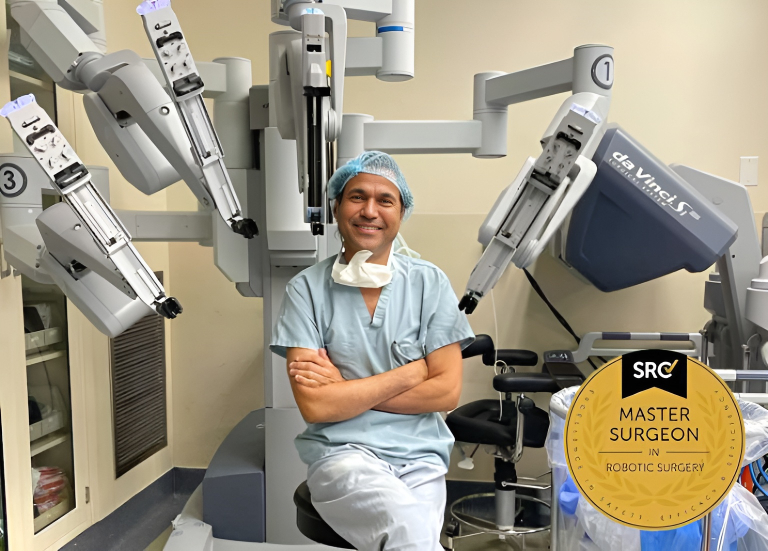
Pankaj Singhal, MD, MS, MHCM
With over 12 years of experience in both academic and private healthcare, Dr. Singhal has trained more than 45 gynecologic surgeons and fellows in minimally invasive and oncologic procedures. He has pioneered new surgical techniques for endometriosis and laparoscopic surgery, completing more than 5,700 robotic-assisted cases nationwide. Renowned for taking on the most complex cases other centers turn away, Dr. Singhal continues to advance the standard of women’s surgical care.