

What Is Sciatic Endometriosis?
Sciatic endometriosis is a rare but extremely painful form of endometriosis in which endometrial-like tissue grows on or around the sciatic nerve—the largest nerve in the body. Because the sciatic nerve runs from the lower spine through the pelvis and down each leg, even a small lesion can trigger severe nerve irritation. For many patients, symptoms flare or worsen during menstruation, making the condition easy to mistake for orthopedic sciatica. Without early diagnosis and intervention, sciatic endometriosis can lead to chronic nerve damage, weakness, and mobility challenges.
Illustration showing the sciatic nerve running from the lower spine through the pelvis and down the leg, with a highlighted region indicating nerve irritation. Used to demonstrate how endometriosis affecting the sciatic nerve can cause radiating leg, hip, and pelvic pain.
COMMON QUESTIONS ABOUT Sciatic Endometriosis
Causes of Sciatic Endometriosis
The exact cause of sciatic endometriosis is not yet fully understood, but it is believed to occur when endometrial tissue grows outside the uterus and attaches to or infiltrates the sciatic nerve.
Endometrial tissue can grow in different areas of the body due to a process called retrograde menstruation. During menstruation, some endometrial tissue flows backwards through the fallopian tubes and into the pelvic cavity instead of being expelled from the body. This misplaced tissue can then implant and grow on organs and tissues outside of the uterus, including the sciatic nerve.
Other factors that may contribute to the development of sciatic endometriosis include genetics, hormonal imbalances, immune system dysfunction, and environmental toxins.
Risk factors for endometriosis, such as a family history of the condition, early onset of menstrual periods, and prolonged menstrual cycles, may also increase the risk of developing sciatic endometriosis.
If sciatic endometriosis is the underlying cause of the sciatica, leg pain may emerge or worsen just before or during menstrual periods. This is because endometriosis is linked to hormonal changes, and as estrogen and progesterone fluctuate during the menstrual cycle, they can trigger pain in the legs.
Causes of Sciatic Endometriosis
The exact cause of sciatic endometriosis is not yet fully understood, but it is believed to occur when endometrial tissue grows outside the uterus and attaches to or infiltrates the sciatic nerve.
Endometrial tissue can grow in different areas of the body due to a process called retrograde menstruation. During menstruation, some endometrial tissue flows backwards through the fallopian tubes and into the pelvic cavity instead of being expelled from the body. This misplaced tissue can then implant and grow on organs and tissues outside of the uterus, including the sciatic nerve.
Other factors that may contribute to the development of sciatic endometriosis include genetics, hormonal imbalances, immune system dysfunction, and environmental toxins.
Risk factors for endometriosis, such as a family history of the condition, early onset of menstrual periods, and prolonged menstrual cycles, may also increase the risk of developing sciatic endometriosis.
If sciatic endometriosis is the underlying cause of the sciatica, leg pain may emerge or worsen just before or during menstrual periods. This is because endometriosis is linked to hormonal changes, and as estrogen and progesterone fluctuate during the menstrual cycle, they can trigger pain in the legs.
Diagnosis of Sciatic Endometriosis
Sciatic endometriosis can be challenging to diagnose since it typically mimics the symptoms of sciatica. Nonetheless, it usually occurs alongside regular endometriosis. If a woman has already been diagnosed with endometriosis and experiences sciatica symptoms, sciatic endometriosis may be suspected. Imaging techniques such as magnetic electromyography, computed tomography (CT) scan, magnetic resonance imaging (MRI), or surgery may be used to diagnose the condition.
Additionally, a test called Lasègue’s test or straight leg raise test can provide an indication of sciatic endometriosis. During the test, the patient lies on her back, and the doctor raises the patient’s legs with the knees kept straight. If the sciatic nerve is under pressure due to sciatic endometriosis, the patient will experience sciatic pain when the legs reach an angle of 30 to 70 degrees relative to the examination table.
Early diagnosis is crucial since sciatic endometriosis can result in irreversible nerve damage caused by recurrent bleeding and scarring if left untreated.
Surgical Methods for the Treatment of Sciatic Endometriosis
The most effective treatment for sciatic endometriosis is surgical removal of the endometrial tissue that is compressing the sciatic nerve. Surgery can also help to address any scarring or adhesions that may have formed due to the condition.
Laparoscopic Surgery
Laparoscopic surgery is a minimally invasive surgical technique that may be used to remove endometrial tissue causing sciatic endometriosis. The procedure involves making small incisions in the abdomen through which a tiny camera and surgical instruments are inserted.
During laparoscopic surgery for sciatic endometriosis, the surgeon will locate and remove the endometrial lesions causing pressure on the sciatic nerve. This may involve removing small pieces of tissue or larger, more extensive areas of endometriosis.
One advantage of laparoscopic surgery is that it typically results in less pain and scarring than open surgery. It also typically has a shorter recovery time, with most patients able to return to their normal activities within a few days to a week.
However, laparoscopic surgery may not be appropriate for all cases of sciatic endometriosis, particularly in cases where the endometrial lesions are extensive or in difficult-to-reach areas. In such cases, open surgery may be necessary to remove the affected tissue. The choice of surgical approach will depend on the individual case and the judgment of the treating physician.
Open Surgical Approach
Open surgical approaches to treating sciatic endometriosis involve making a larger incision in the abdomen or pelvis to access the affected area. This technique is typically reserved for cases where laparoscopic or robotic-assisted surgery is not feasible or safe.
During open surgery, the surgeon may remove the affected tissue, scar tissue, and endometrial lesions from around the sciatic nerve. The procedure may also involve repairing any damage to the nerve itself, such as removing any constrictions or freeing it from any adhesions.
Open surgical approaches for sciatic endometriosis can be more invasive than laparoscopic or robotic-assisted surgery and may require a longer hospital stay and recovery time. Additionally, open surgery can result in more scarring and pain than the less invasive approaches. However, in some cases, open surgery may be the best option for treating severe or complicated cases of sciatic endometriosis.
The cost of open surgical approaches for sciatic endometriosis can vary depending on several factors such as the location of the medical facility, the surgeon’s fees, and any additional charges associated with the procedure. It is important for patients to discuss the potential costs and any insurance coverage or payment options with New York Gynecology Surgery & Endometriosis (NYGSE) and insurance provider.
Robotic-Assisted Laparoscopic Surgery
Robotic-assisted laparoscopic surgery is a minimally invasive surgical technique that uses a robotic system to aid in performing the procedure. The robotic system consists of a console operated by the surgeon, which controls the robotic arms that hold the surgical instruments. This allows for greater precision and dexterity during the surgery.
Robotic-assisted laparoscopic surgery for sciatic endometriosis is a newer and less commonly used technique compared to traditional laparoscopic surgery. The cost of this procedure can vary depending on several factors such as the location of the medical facility, the surgeon’s fees, and any additional charges associated with the use of the robotic system.
As with any medical procedure, it is important for patients to check with their insurance provider and the treating physician to determine the expected cost of the procedure and any potential out-of-pocket expenses they may incur. It is also important to discuss any potential financial assistance or payment options that may be available.
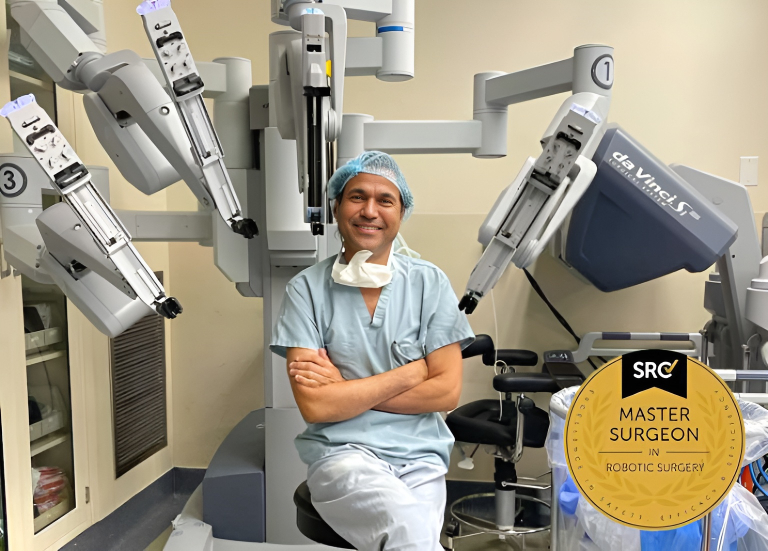
Pankaj Singhal, MD, MS, MHCM
With over 12 years of experience in both academic and private healthcare, Dr. Singhal has trained more than 45 gynecologic surgeons and fellows in minimally invasive and oncologic procedures. He has pioneered new surgical techniques for endometriosis and laparoscopic surgery, completing more than 5,700 robotic-assisted cases nationwide. Renowned for taking on the most complex cases other centers turn away, Dr. Singhal continues to advance the standard of women’s surgical care.